[MA]Marrakech, Morocco
Marrakech leather, tanned the eleventh century way
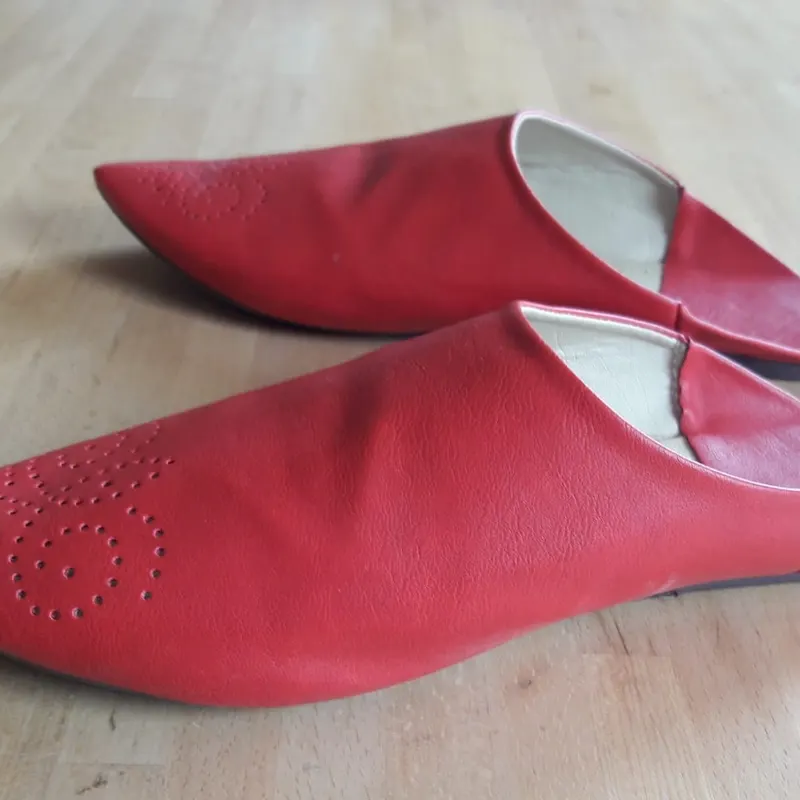
The tanneries at Bab Debbagh have cured hides in stone vats for nine hundred years. Babouche slippers and poufs made from that leather age the way modern leather cannot.
By the eastern gate of the Marrakech medina, the Bab Debbagh tanneries still cure hides the way they did when the city was a caravan stop: soaked in lime, softened, then tanned in stone vats with mimosa bark, pomegranate rind and tamarisk. No chromium, no factory drums. The process takes weeks where industrial tanning takes hours.
Vegetable tanned leather behaves differently for the rest of its life. It darkens and softens with use instead of cracking, which is why a Marrakech pouf or a pair of babouche slippers a decade old looks better than it did new. The souk workshops cut, dye and stitch within walking distance of the vats.
The same workshops that sell in the souk list on 1VIM with the door price shown: the maker's price, shipping from Morocco, and whatever your country charges at the border, all before you pay. Haggling is part of the souk; the pin is for everyone who cannot get there.
More stories
- Kente cloth, the fabric that carries namesEvery kente pattern has a name and a meaning, woven four inches at a time in Bonwire. The cloth on a graduation stole has a four hundred year old grammar behind it.
- Lopapeysa, the sweater Iceland knits in the roundIcelandic sheep have not been crossbred in a thousand years, and their wool makes a sweater that works in weather that stops everything else. Here is why a real lopapeysa is knit, not sewn.
- Jaipur block print, carved teak and steady handsA Sanganer bedsheet passes under a carved wooden block hundreds of times, each strike lined up by eye. Here is how to tell hand block print from a screen printed copy.