[IS]Reykjavik, Iceland
Lopapeysa, the sweater Iceland knits in the round
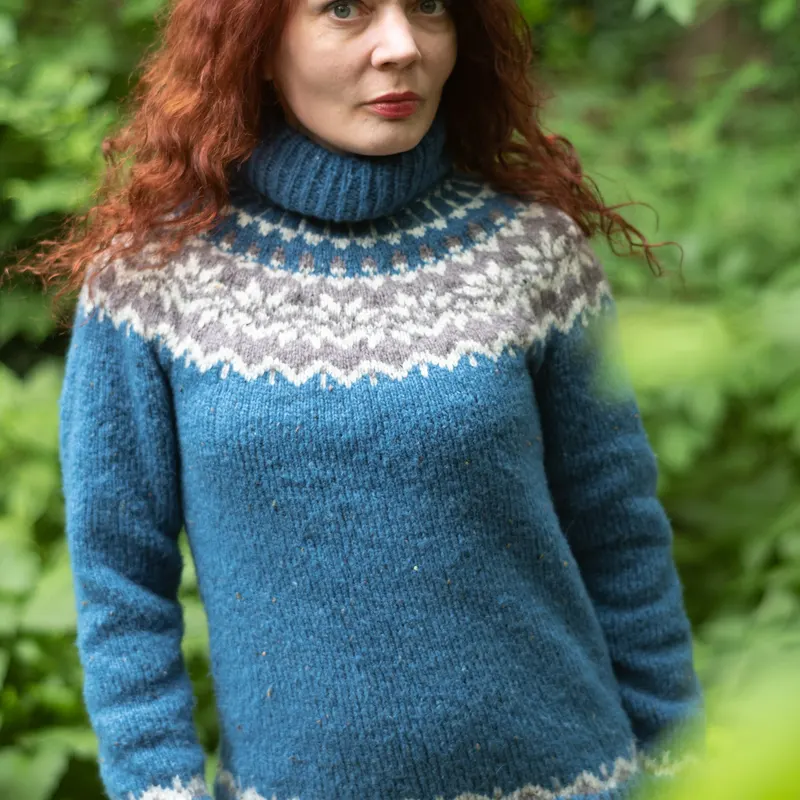
Icelandic sheep have not been crossbred in a thousand years, and their wool makes a sweater that works in weather that stops everything else. Here is why a real lopapeysa is knit, not sewn.
The Icelandic sheep arrived with the settlers around the year 874 and has been kept pure since: no crossbreeding, by law. Its fleece grows in two layers, a long weatherproof outer hair and a soft insulating undercoat, and lopi yarn spins both together. The result is wool that is light, warm when wet, and almost windproof.
A lopapeysa is knit in the round, body and sleeves joined into one piece at the yoke, where the pattern radiates in concentric rings. No seams anywhere is the test: if a sweater sold as a lopapeysa has shoulder seams, it came off a sewing machine, not a pair of circular needles. The classic yoke patterns date only to the 1950s, which surprises people; Icelanders made something traditional in one generation.
Hand knitters across Iceland sell through cooperatives and their own needles, and the wool must be Icelandic for the name to mean anything. On 1VIM the knitter's pin sits in Reykjavik, the price is theirs, and the sweater ships from the island with the door price shown before you pay.
More stories
- Jaipur block print, carved teak and steady handsA Sanganer bedsheet passes under a carved wooden block hundreds of times, each strike lined up by eye. Here is how to tell hand block print from a screen printed copy.
- Suzani, the embroidery brides carried across the Silk RoadIn Bukhara a suzani was begun at a daughter's birth and finished for her wedding, panel by panel, by many hands. The stitches still carry sun discs and pomegranates.
- Celadon, the green glaze of Chiang MaiThe crackled green of Thai celadon comes from wood ash and iron, fired blind at over 1,200 degrees. The Lanna kilns around Chiang Mai never stopped making it.