[TH]Chiang Mai, Thailand
Celadon, the green glaze of Chiang Mai
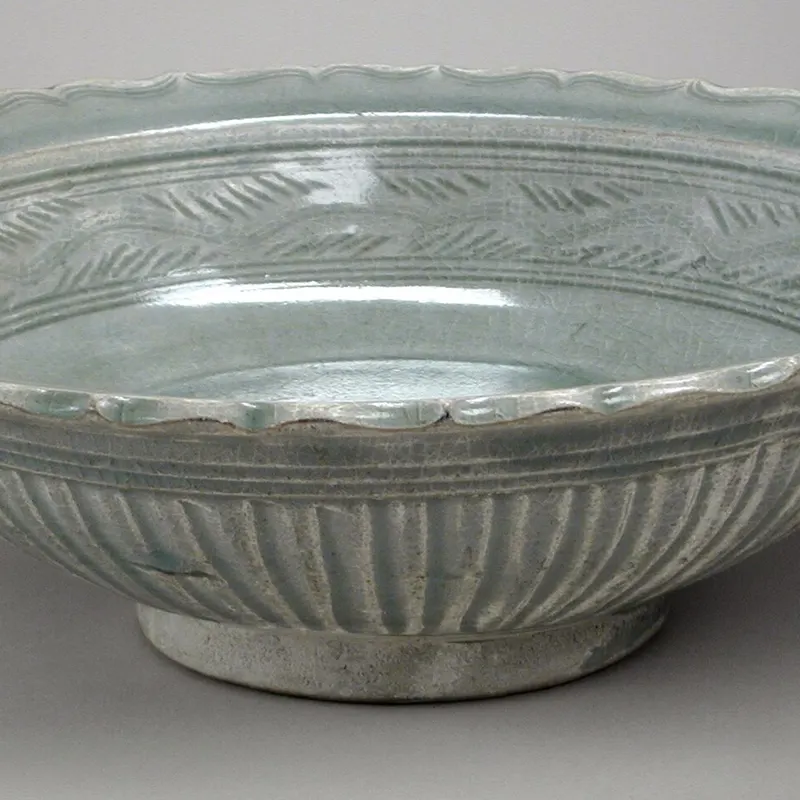
The crackled green of Thai celadon comes from wood ash and iron, fired blind at over 1,200 degrees. The Lanna kilns around Chiang Mai never stopped making it.
Celadon's green needs no pigment. The glaze is wood ash and clay with a trace of iron, and the color arrives in the kiln: fired past 1,200 degrees with the oxygen starved, the iron turns the glass jade green. The fine web of cracks in the surface, the crackle, comes as the glaze cools and shrinks against the clay, and collectors read it like a signature.
The kilns of the old Lanna kingdom around Chiang Mai have worked this way for centuries, alongside the paper umbrella makers of Bo Sang and the silversmiths of Wualai road. Each piece is thrown, glazed and fired by hand, which is why no two crackles match.
A celadon bowl in a Chiang Mai workshop costs a fraction of its boutique price abroad, and on 1VIM the kiln's own listing shows the landed price, shipping and duties included, before you pay. The crackle in your cupboard will be the only one like it.
More stories
- Cusco weaving, the cloth that predates the IncaIn the villages above Cusco, weavers on backstrap looms turn alpaca fibre and cochineal red into cloth whose patterns are older than the empire that made the city famous.
- Huipil, the blouse that names a villageA Maya weaver's huipil tells you where she is from before she says a word. The patterns are village signatures, woven on the same backstrap looms as a thousand years ago.
- Florence leather, bound in the OltrarnoAcross the river from the Uffizi, workshops still vegetable-tan leather and marble paper by floating pigment on water, the way they did for the Medici.