[PE]Cusco, Peru
Cusco weaving, the cloth that predates the Inca
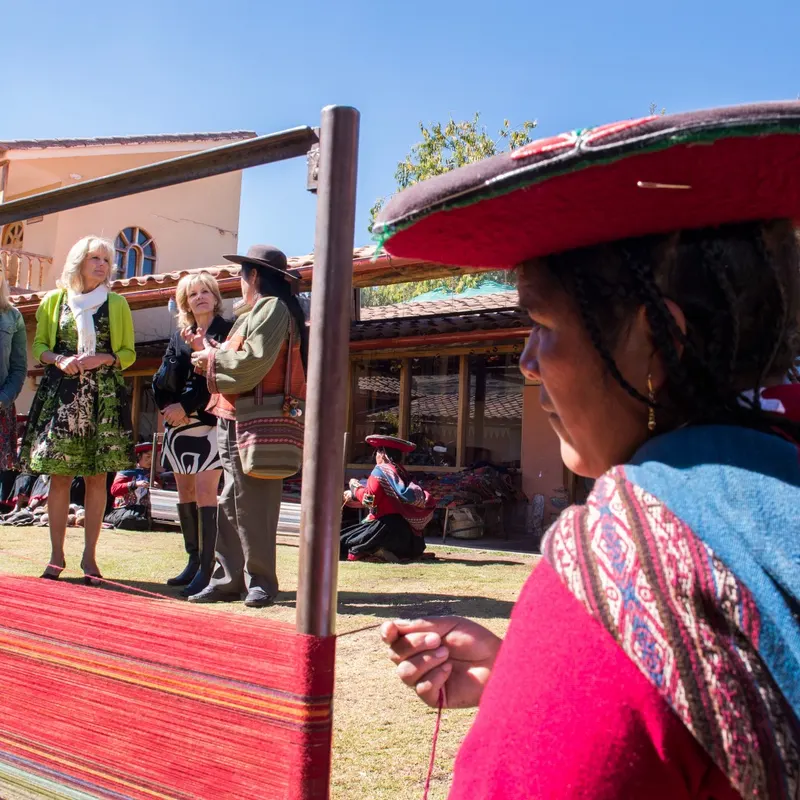
In the villages above Cusco, weavers on backstrap looms turn alpaca fibre and cochineal red into cloth whose patterns are older than the empire that made the city famous.
The weaving cooperatives of the Sacred Valley, Chinchero above all, work on backstrap looms: one end tied to a post, the other around the weaver's waist, tension held by the body itself. The techniques predate the Inca; the patterns name lakes, rivers and the eyes of animals, and a trained eye can tell a weaver's village from her cloth.
The red is cochineal, an insect gathered from cactus pads, and the fibre is alpaca from herds grazing above 3,500 metres, shorn, spun with a drop spindle and dyed with plants gathered nearby. A fine manta is months of work, and the cooperative model means the weaver sets her own price and keeps it.
Machu Picchu brings the world to Cusco for a day; the cloth is what the valley has made for a thousand years. On 1VIM the cooperative's pin sits in the Sacred Valley and the door price is on the listing, so the weaver's price reaches you whole.
More stories
- Huipil, the blouse that names a villageA Maya weaver's huipil tells you where she is from before she says a word. The patterns are village signatures, woven on the same backstrap looms as a thousand years ago.
- Florence leather, bound in the OltrarnoAcross the river from the Uffizi, workshops still vegetable-tan leather and marble paper by floating pigment on water, the way they did for the Medici.
- Alebrijes, the dream creatures of OaxacaA fever dream in 1936 gave Mexico its spirit creatures. In the villages around Oaxaca they are carved from copal wood and painted point by point, one hair-thin brush at a time.