[IN]Jaipur, India
Jaipur block print, carved teak and steady hands
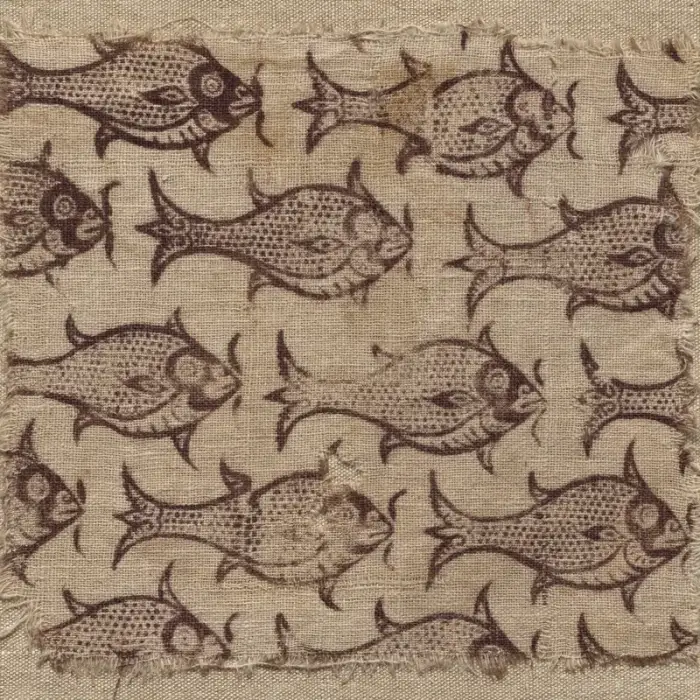
A Sanganer bedsheet passes under a carved wooden block hundreds of times, each strike lined up by eye. Here is how to tell hand block print from a screen printed copy.
Around Jaipur, in Sanganer and Bagru, cotton is still printed by hand: a teak block carved with one color's share of the pattern, pressed into dye, struck onto the cloth, moved one repeat over, struck again. A three color design means three blocks and three passes over every inch. Bagru works with mud resist and natural dyes; Sanganer is famous for fine florals on white.
The tell is the imperfection. Hand block repeats drift a hair, corners kiss instead of locking, and the dye sits deeper where the block landed harder. A screen printed copy is too even. Flip the cloth: real block print usually shows nearly as strong on the back, because the dye went through, not onto.
Printers' families in Sanganer have held this trade for generations, and Jaipur blue pottery, made of quartz and glass with no clay at all, comes from the same city. On 1VIM their pins sit where the workshops are, and the landed price is on the listing before you pay.
More stories
- Suzani, the embroidery brides carried across the Silk RoadIn Bukhara a suzani was begun at a daughter's birth and finished for her wedding, panel by panel, by many hands. The stitches still carry sun discs and pomegranates.
- Celadon, the green glaze of Chiang MaiThe crackled green of Thai celadon comes from wood ash and iron, fired blind at over 1,200 degrees. The Lanna kilns around Chiang Mai never stopped making it.
- Cusco weaving, the cloth that predates the IncaIn the villages above Cusco, weavers on backstrap looms turn alpaca fibre and cochineal red into cloth whose patterns are older than the empire that made the city famous.