[GH]Accra, Ghana
Kente cloth, the fabric that carries names
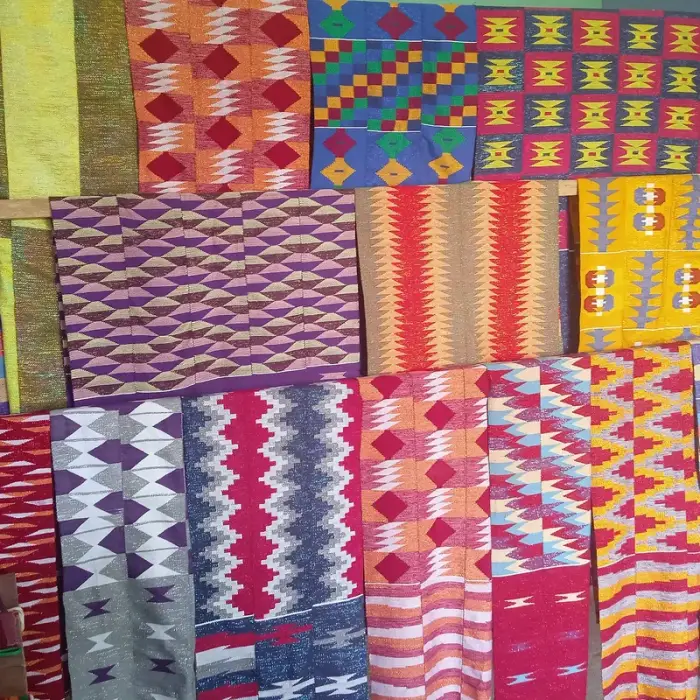
Every kente pattern has a name and a meaning, woven four inches at a time in Bonwire. The cloth on a graduation stole has a four hundred year old grammar behind it.
Kente is woven on narrow looms in strips about four inches wide, then sewn edge to edge into a full cloth. The weavers of Bonwire, near Kumasi in Ghana, have supplied Asante royalty since the seventeenth century, and every pattern carries a name: Adwinasa, 'all motifs are used up', was reserved for kings; Sika Futuro is 'gold dust'. Wearing a pattern says something, and Ghanaians can read it.
The strips matter because the weave does: kente is a double weave, warp patterns and weft patterns trading dominance along the strip, which is why real kente looks different along its length and printed imitations do not. A full men's cloth of twenty four strips is weeks of work at the loom.
The graduation stoles and the printed 'kente' by the metre sold worldwide mostly never saw Ghana. The weavers who hold the real grammar list on 1VIM with their pin in Accra and Bonwire, the landed price shown before you pay, and the strip you buy woven by a person whose family has read these patterns for generations.
More stories
- Lopapeysa, the sweater Iceland knits in the roundIcelandic sheep have not been crossbred in a thousand years, and their wool makes a sweater that works in weather that stops everything else. Here is why a real lopapeysa is knit, not sewn.
- Jaipur block print, carved teak and steady handsA Sanganer bedsheet passes under a carved wooden block hundreds of times, each strike lined up by eye. Here is how to tell hand block print from a screen printed copy.
- Suzani, the embroidery brides carried across the Silk RoadIn Bukhara a suzani was begun at a daughter's birth and finished for her wedding, panel by panel, by many hands. The stitches still carry sun discs and pomegranates.