[MX]Oaxaca, Mexico
Barro negro, the black clay of Oaxaca
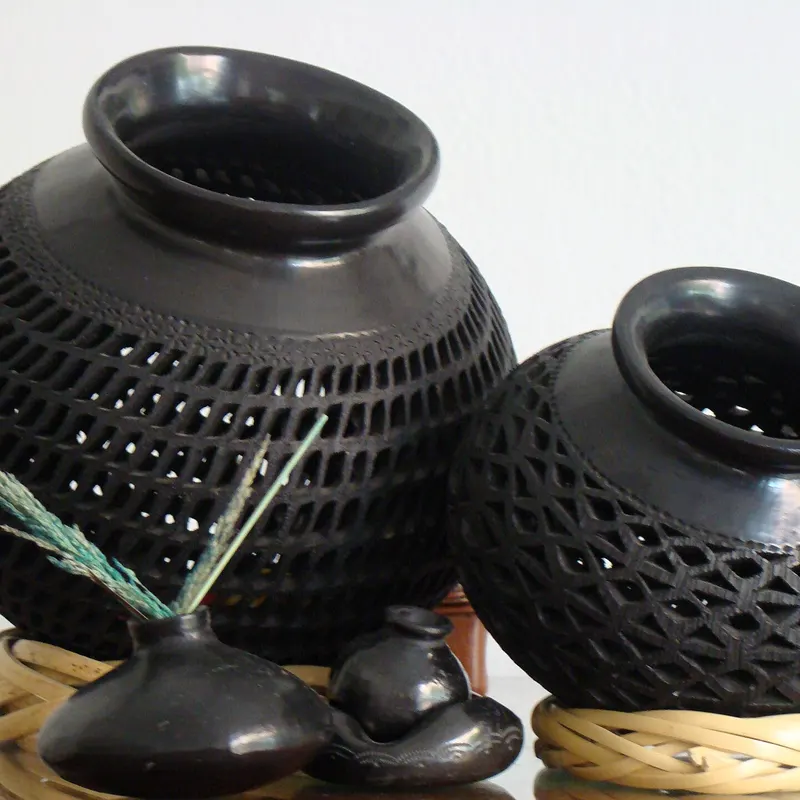
The black pottery of San Bartolo Coyotepec gets its shine from burnishing with a quartz stone, not from glaze. Here is how it is made and how to bring a piece home.
In San Bartolo Coyotepec, a village south of Oaxaca City, the clay comes out of the ground grey and comes out of the kiln black. The colour is not paint and not glaze: it is the clay itself, smoke fired at a low temperature in a closed kiln.
The shine that made barro negro famous is even older technology: before firing, the half dry piece is burnished by hand with a quartz stone until the surface compacts into a mirror. A large olla can take days of polishing. Every workshop's burnish reads slightly differently, the way handwriting does.
Because the pieces are fired low, barro negro is decorative rather than ovenproof, and it travels well when packed right. The workshops on 1VIM pack for export and the landed price to your door, duties included, is on the listing before you pay.
More stories
- Pashmina, what the word actually meansMost of what is sold as pashmina is not. Real pashmina is the winter undercoat of the Changthangi goat, hand spun and hand woven in Kashmir. Here is how to tell.
- Sakai knives, six hundred years of edgesNinety percent of Japan's professional chef knives come from one city. Sakai's forges have been drawing out steel since the samurai stopped needing swords.
- Murano glass, the island that kept a secretVenice exiled its glassmakers to one island in 1291 and forbade them to leave. Seven centuries later the furnaces are still lit, and most glass sold as Murano never saw them.