[UZ]Bukhara, Uzbekistan
Ikat, the cloud cloth of the Silk Road
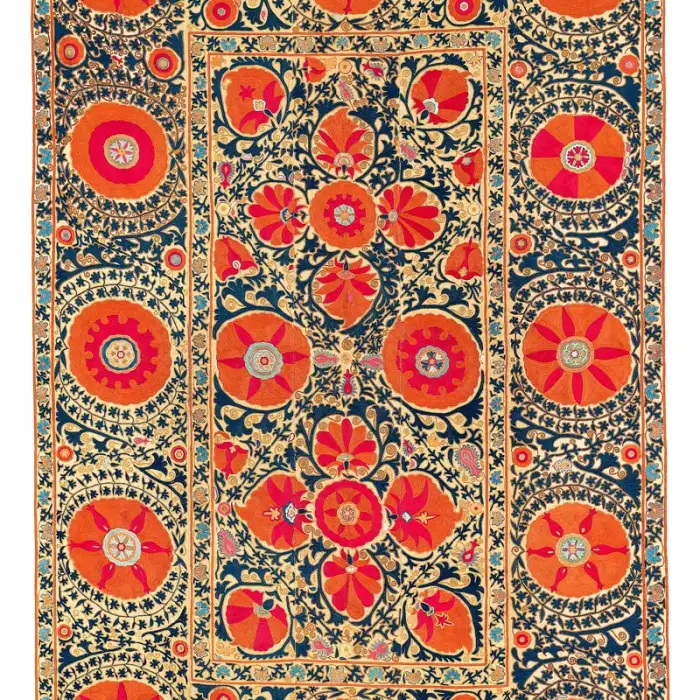
Uzbek dyers call ikat abrbandi, cloud binding: the pattern is tied and dyed into the silk before a single thread is woven. That is why the edges blur like weather.
Every other patterned cloth is decorated after it exists. Ikat is decided before: the warp threads are stretched, bound in tight bundles where the colour must not reach, dipped, untied, bound again for the next colour, and only then put on the loom. Uzbek dyers call the work abrbandi, cloud binding, and the soft feathered edge of every motif is the proof that a hand tied it.
The cloth robes of Bukhara and the bazaars along the Silk Road were made this way, and the craft never left: workshops in Uzbekistan still tie by hand and dye with pomegranate skin, indigo and madder, then weave silk for a wall panel or silk and cotton, called adras, for something worn. A single length can pass through six pairs of hands before it reaches the loom.
Because the alignment is set by hand, no two panels repeat exactly, and a pattern that lines up too perfectly was printed, not tied. On 1VIM the maker's own pin sits on the map in Bukhara, and the landed price of a length of ikat, duties and delivery included, is on the listing before you pay.
More stories
- Krobo beads, the glass Ghana melts back into colourIn the Krobo hills east of Accra, broken bottles are ground to powder, layered into clay moulds and fired into beads that have carried meaning at births, weddings and funerals for generations.
- Why azulejo tiles come from PortoThe blue tiles on Porto's facades have been painted the same way since the 1700s. Here is what makes a real azulejo, and how to buy one from the people who still make them.
- Kiyomizu-yaki, the kilns of KyotoTwelve centuries as the imperial capital left Kyoto with the densest concentration of living craft in Japan. Kiyomizu-yaki ceramics are the proof you can hold.