[PT]Porto, Portugal
Cork, the bark Portugal harvests every nine years
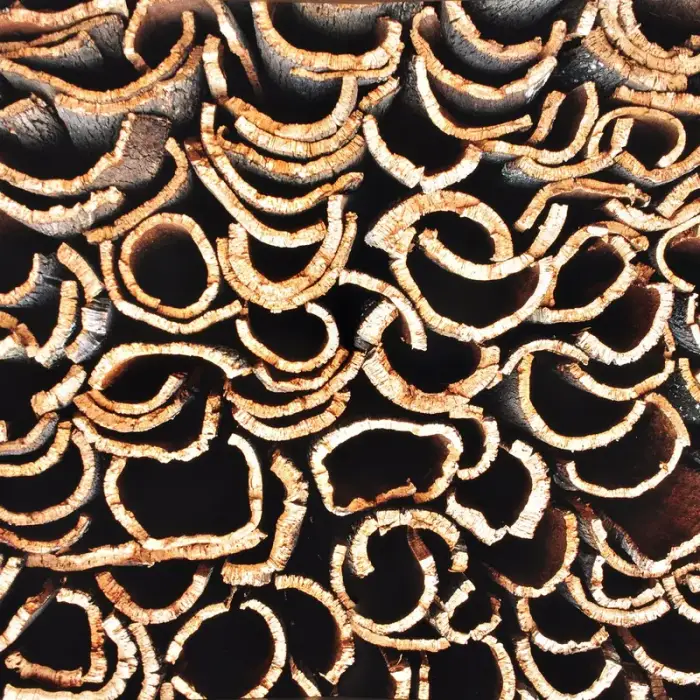
The cork oak is never cut down. Its bark is stripped by hand every nine years and grows back, which is why a cork bag from Porto is one of the most honest materials you can buy.
Portugal grows around half of the world's cork, on the montado, a landscape of cork oaks and grazing land across the Alentejo and up toward the Douro. A tree gives its first usable bark at about twenty five years, and after that it is stripped every nine years for the rest of its life, which can be two centuries. The harvesters work in early summer with hand axes, cutting and levering the bark off in curved planks without touching the living layer underneath. The tree is painted with the year of the harvest and left to grow a new coat.
Bottle stoppers take the best planks. The rest is boiled, flattened and cut into sheets, and the thinnest sheets, backed with cotton, become cork fabric: soft, light, water resistant and easy to clean, which is why makers in Porto use it for bags, wallets and coasters. It ages like leather, darkening a little with the hands that carry it, and it comes from a tree that is still standing.
Ateliers in Porto pair cork with the city's other trade, the painted azulejo tile, and list both on 1VIM with their pin on the Douro. The landed price shows before you pay, the parcel comes with customs prefilled, and the material in your hands grew back on the same tree the year after it was cut. The Porto region page shows who is making with it today.
More stories
- Ikat, the cloud cloth of the Silk RoadUzbek dyers call ikat abrbandi, cloud binding: the pattern is tied and dyed into the silk before a single thread is woven. That is why the edges blur like weather.
- Krobo beads, the glass Ghana melts back into colourIn the Krobo hills east of Accra, broken bottles are ground to powder, layered into clay moulds and fired into beads that have carried meaning at births, weddings and funerals for generations.
- Why azulejo tiles come from PortoThe blue tiles on Porto's facades have been painted the same way since the 1700s. Here is what makes a real azulejo, and how to buy one from the people who still make them.